The dual-monitor build
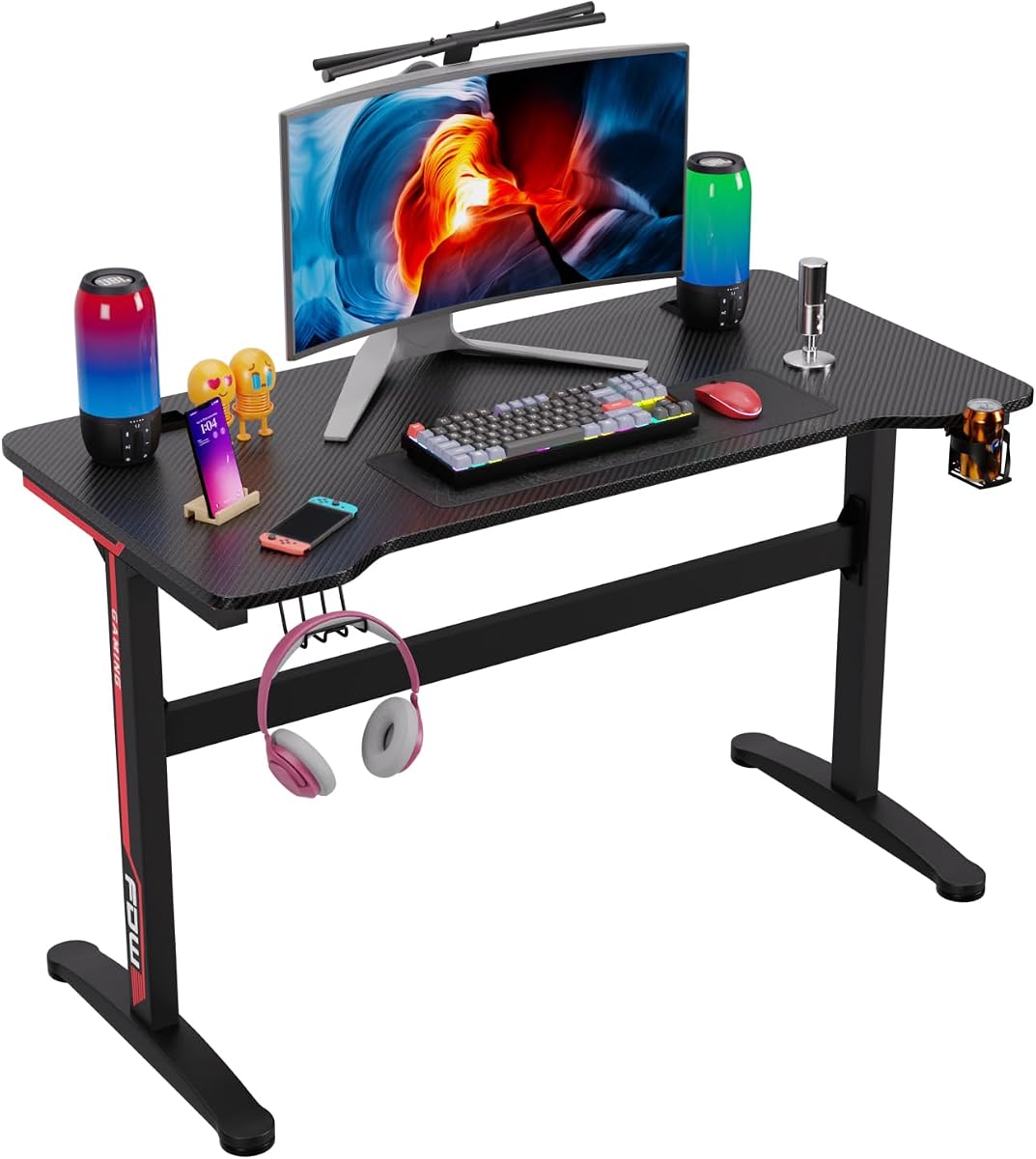
Two screens, a keyboard and a mousing area fit across the top without anything hanging over an edge, which is the whole reason to buy 47 inches instead of 40.

Catalogue/Desks & Workstations/Data sheet
A 47.2-inch top on a racing-braced metal frame, in R or T shape, wide enough for two monitors and a tower beside them.
Field notes
The racing name comes from the frame, not the finish. Painted metal tube legs brace in either an R or a T shape under a 47.2 by 23.6 inch top: the R frame closes one side with a full panel, the T frame leaves the space under the desk open. Both put the surface at 29.3 inches and both are wide enough for two monitors with a tower standing on the floor beside them. The top is P2-grade MDF, dense enough that a monitor arm clamped to the back edge does not dish the board.
With more than 3,500 ratings at 4.6 stars, this is the most-bought desk FDW makes, and the reason is the width against the price. Forty-seven inches is roughly where a desk stops being a table you put a laptop on and starts being a workstation. Getting there for the cost of a decent keyboard is the whole argument. The colour choice is red or blue trim on black, which reads as gaming-room furniture rather than office furniture, and there is no toning that down short of covering the top.
The dossier
The two frames are the same desk braced differently. R puts a solid panel down one side, which stiffens the whole thing laterally and gives you a surface to run cable ties along. T braces from the centre and leaves both footwells clear, which matters if you sit sideways, share the desk with someone, or want to roll a tower cabinet underneath. Neither version costs more than the other, so choose by what goes under the desk rather than by how the side looks.
Two 24-inch monitors on their factory stands take up about 42 inches side by side. On a 47.2-inch top that leaves margin at each end instead of overhang, which is the difference between a dual setup and a dual setup that wobbles every time you type. Move them onto a single arm and the whole back half of the desk opens up for everything else.
P2 is the standard density-board grade used across flat-pack furniture, and it behaves predictably. It takes screws well, holds a clamped load at the edge, and it dislikes standing water. Wipe spills before they find the seam at the edge banding and the top stays flat for years. That is the entire maintenance list for this desk.
The honest ledger
Deployment
Two screens, a keyboard and a mousing area fit across the top without anything hanging over an edge, which is the whole reason to buy 47 inches instead of 40.
Pick the T frame and both footwells stay clear, so two people can work at opposite ends of the same desk without knocking knees against a side panel.
For a teenager moving off a folding table, this is the cheapest step up to full workstation width that still has a metal frame under it.
Owner questions
Bracing only. The R frame has a solid panel down one side for extra lateral stiffness; the T frame braces from the centre and leaves both footwells open. Same top, same height, same price.
Yes. Two 24-inch screens on their factory stands occupy about 42 inches, and the desktop is 47.2 inches wide, so there is margin at each end rather than overhang.
No. The hardware ships with the desk and the parts are numbered to match the instructions. It is a one-person build.
A 47.2-inch top on a racing-braced metal frame, in R or T shape, wide enough for two monitors and a tower beside them. Filed under desks & workstations — checked against the rest of the range on this sheet.
Same aisle
| Model | Headline spec | Rating | Price | |
|---|---|---|---|---|
| FDW 47" Carbon-Fiber Desk with Socket Rack | Coated steel tube | ★★★★★ 4.6 (434) | $62.98 | Data sheet → |
| FDW 47" K-Shaped Gaming Desk | Steel, K-braced with a triangular junction | ★★★★★ 4.7 (3) | $74.90 | Data sheet → |
| FDW 47" Metal-Frame Writing Desk | Metal bracket, roughly 220 lb capacity | ★★★★★ 4.5 (126) | $41.99 | Data sheet → |